
Digiday
The case for and against turning off Google crawlers
August 25, 2026
Subscribe: Apple Podcasts • Spotify
Gone are the days where publishers enjoyed a surplus of search traffic referral. AI bot crawlers have usurped those eyeballs. Publishers, however, aren’t taking the changes lying down.
The degradation of search referral traffic isn’t new. The writing has been on the wall since the advent of AI chatbots. Now, AI features are keeping users on Google’s platforms longer and the Google-publisher value exchange is in free fall.
Continue reading this article on digiday.com. Sign up for Digiday newsletters to get the latest on media, marketing and the future of TV.

X creates a new revenue model for creators — but will it actually win them over?
August 25, 2026
X is launching a new revenue model for creators next month, called the Original Content Rewards Program, that will reward creators who produce “original, high-quality content” that is a reflection of their creativity and expertise, according to the official announcement.
SpaceXAI execs told Digiday they consider it the “year of the creator,” which is why they’re making changes to its revenue program in an attempt to court them.
But X’s program faces a challenge in winning over creators. The platform’s feed can be controversial, which media buyers and creator agents say diminishes its creator and advertising value compared to others.
Continue reading this article on digiday.com. Sign up for Digiday newsletters to get the latest on media, marketing and the future of TV.

In Graphic Detail: How AI search has impacted the web traffic of over 50 advertisers
August 25, 2026
Since AI Overviews were first rolled out by Google in 2024, they’ve only begun to appear against an ever-larger proportion of search results. According to Ahrefs, that’s had the effect of cutting web traffic to some websites by as much as 58% as users opt to remain within Google’s real estate, rather than clicking through.
Understanding how that is impacting advertisers is difficult, because this change has not been felt equally by every business. Companies that heavily rely on direct-to-consumer sales like jeweler Kendra Scott, or that sell products that customers tend to spend a long time considering, like automakers or white goods, are finding themselves on the sharp end of new search behaviors, for example.
If we zoom out a little, however, clear patterns begin to emerge. At marketing services group Brainlabs, organic web traffic declined on average by over 10% following the introduction of Google’s Overview feature, across a sample of the company’s own Google Analytics data covering 54 clients. The dataset includes 24 U.S. firms, 24 British brands, plus six clients operating in other markets (29 were larger advertisers employing at least 1,000 staff).
Continue reading this article on digiday.com. Sign up for Digiday newsletters to get the latest on media, marketing and the future of TV.

Ad Tech Briefing: AI advertising’s measurement problem is really a governance problem
August 25, 2026
Observers hope adland won’t repeat past mistakes, especially as it looks to develop standards for measuring how ads will work in LLMs, many of which are set to become the primary means of accessing information.
Jaded observers of the past will note that the stakes have never been higher, and equally lament how the deck has never been stacked more in the favor of Big Tech, but let’s get into the weeds a bit before jumping to conclusions.
This is a member-exclusive article from Digiday. Continue reading it on digiday.com and subscribe to continue reading content like this.

Walmart finally starts supporting Apple Pay and Google Pay
August 25, 2026
This story was first published by Digiday sibling Modern Retail.
By the end of this year, shoppers will finally be able to use Apple Pay and Google Pay in Walmart stores, ending years of frustration that the retailer didn’t support what is now a nearly ubiquitous payment option.
Walmart will begin to support contactless payment methods at select Walmart stores and Sam’s Club locations beginning Aug. 24, with plans to roll it out to all U.S. stores and clubs by the end of 2026 and to fuel stations by mid-2027, the company said Friday.
Continue reading this article on digiday.com. Sign up for Digiday newsletters to get the latest on media, marketing and the future of TV.
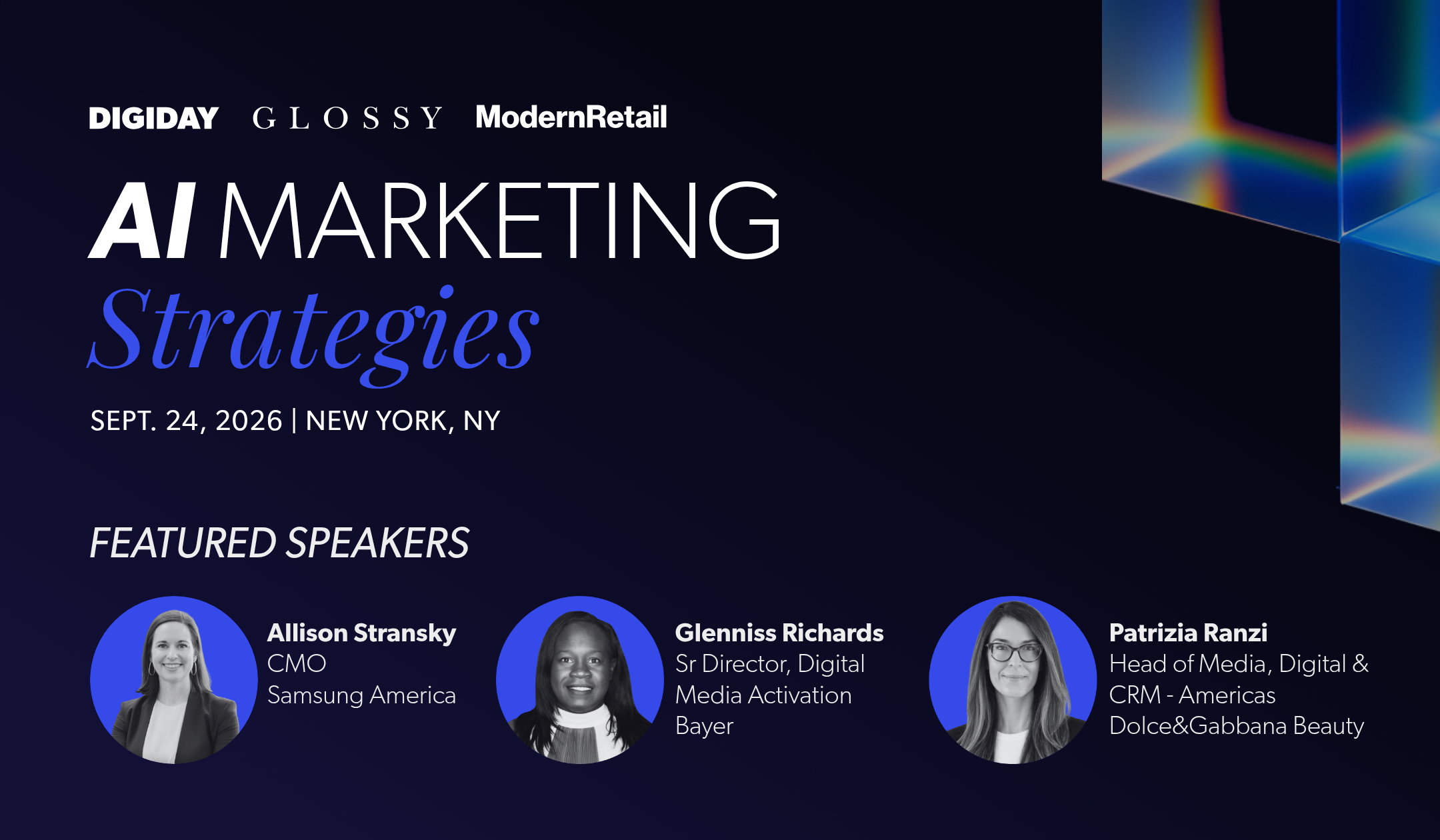
AI Marketing Strategies: From experimentation to execution with Samsung, Bayer, David’s Bridal and Dolce&Gabbana Beauty
August 24, 2026
When we convened in February, marketers’ approaches to AI were still nascent. Over the past several months, many iconic brands have moved from early experimentation to strategies and tactics that put AI firmly in the spotlight — and increasingly in the agentic driver’s seat.
On Sept. 24 in New York City, Digiday, Glossy and Modern Retail will host the second iteration of AI Marketing Strategies, bringing together brand leaders, agency executives, analysts and technology providers to explore what’s actually working as AI reshapes modern marketing.
This next phase of AI Marketing Strategies will cut through the hype and lip service, zeroing in on standout case studies and emerging practices from brands like Samsung, Bayer and David’s Bridal and others that are quickly becoming table stakes across product discovery, personalization and targeting, creative generation and more.
Continue reading this article on digiday.com. Sign up for Digiday newsletters to get the latest on media, marketing and the future of TV.

Media Buying Briefing: Legal woes can hurt a holdco, but will it matter to clients?
August 24, 2026
What a time to be a holding company CEO. You’re either the charmer who lands big clients then waltzes off to the next pitch to sprinkle your fairy dust (Arthur Sadoun), or you’re the wily old veteran who’s climbed to No. 1 by knowing when to buy — or not buy — a competitor (John Wren).
But what about the CEO who’s actually trying to be honest and transparent by acknowledging the internal challenges to transformational change — and then has that transparency used against her in a court of law? Cindy Rose, WPP’s CEO who’s about to hit her one-year anniversary running the OG of holdcos, finds herself in that role, whether she likes it or not.
This is a member-exclusive article from Digiday. Continue reading it on digiday.com and subscribe to continue reading content like this.

The IAB is developing a framework to tackle AI advertising measurement
August 24, 2026
Ads are starting to get served to bots instead of people. Nobody agrees on what that’s worth, or who gets credit for it.
The Interactive Advertising Bureau is trying to fix that. A new framework, due out Nov. 12, will tackle how to attribute and credit conversions influenced by AI, the mechanism increasingly standing between publishers and the humans who used to click through to their sites directly.
The IAB is working to “create a shared framework for measuring and crediting AI’s role in conversions, especially when traditional signals are minimized,” according to Caroline Giegerich, vp of AI at the IAB. The IAB is exploring new measurement frameworks and signals to quantify AI’s influence on purchase decisions, she added.
Continue reading this article on digiday.com. Sign up for Digiday newsletters to get the latest on media, marketing and the future of TV.

The new AI playbook: The rules brands are setting around customer-facing content
August 24, 2026
This article was first published by Digiday sibling Modern Retail.
When and how to use AI in advertising imagery is proving to be one of the biggest questions facing marketers this year.
For some brands, AI platforms and services are proving to be game-changing for their ability to speed up creative processes, and save money. Companies like personal care brand Goodwipes are using it not only to create content but also to optimize past photo shoots, while others like Hilton are using AI tools to fuel more ad campaigns without extra shoots. Conglomerates like Unilever are using editing and visualization tools to quickly jump on viral trends, while companies like beverage brand Koia are using it as the basis for entire campaigns that aim to go beyond the bounds of reality.
Continue reading this article on digiday.com. Sign up for Digiday newsletters to get the latest on media, marketing and the future of TV.

OpenAI is sharpening its focus on enterprise advertisers
August 24, 2026
OpenAI’s enterprise ambitions have found a new target: ad teams.
The company is hiring a San Francisco-based head of ads enterprise marketing to shape that positioning, according to a vacancy currently on OpenAI’s careers page. The role is tasked with building “the content, thought leadership, events and demand programs needed to drive enterprise advertising pipeline and long-term growth”.
The role comes with a compensation package between $374,000 and $415,000 plus equity, according to the job posting. The successful candidate will also “shape the narratives that position OpenAI as a premium advertising platform for the world’s marketers” and “establish OpenAI as a trusted, differentiated platform for enterprise advertisers and agencies”.
Continue reading this article on digiday.com. Sign up for Digiday newsletters to get the latest on media, marketing and the future of TV.
WTF are fandoms, and why are marketers chasing them?
August 24, 2026
Marketers want their brands to be part of culture, rather than advertising around it — and see fandoms as the way in.
Marketing execs have long since rallied around industry buzzwords like authenticity or community. From RFPs to campaign planning, high level marketing execs have entered “fandom” into the current buzzword du jour.
For this word — unlike so many other parts of the industry — marketers have a consistent and clear definition.
Continue reading this article on digiday.com. Sign up for Digiday newsletters to get the latest on media, marketing and the future of TV.

Discord adds lower funnel with outcomes push
August 21, 2026
Discord is taking its ads business further down the funnel with its latest ad format, Play Quest+.
The format lets brands offer players rewards for completing in-game actions, such as finishing a match, completing a tutorial or playing with a friend. It marks a shift for Discord from simply putting brands in front of its highly engaged gaming communities to giving advertisers a way to drive — and measure — what those users do next.
Here’s how it works: Players accept a Quest and link their Discord and game accounts, allowing Discord to automatically track their progress as they play. Brands can then reward them for completing meaningful in-game actions, using Discord’s Social SDK and Events API.
Continue reading this article on digiday.com. Sign up for Digiday newsletters to get the latest on media, marketing and the future of TV.
Walmart gets close to $3 billion in tariff refunds
August 21, 2026
This story was first published by Digiday sibling Modern Retail.
Tariff refunds continue to bolster the balance sheets of big retailers while consumers remain constrained by higher fuel prices and other macroeconomic factors.
Walmart has received about $2.9 billion in tariff refunds, the company’s CFO John David Rainey told investors in the company’s second-quarter earnings call Thursday morning.
Continue reading this article on digiday.com. Sign up for Digiday newsletters to get the latest on media, marketing and the future of TV.
For brands, the creator ambassador is becoming a creator executive
August 21, 2026
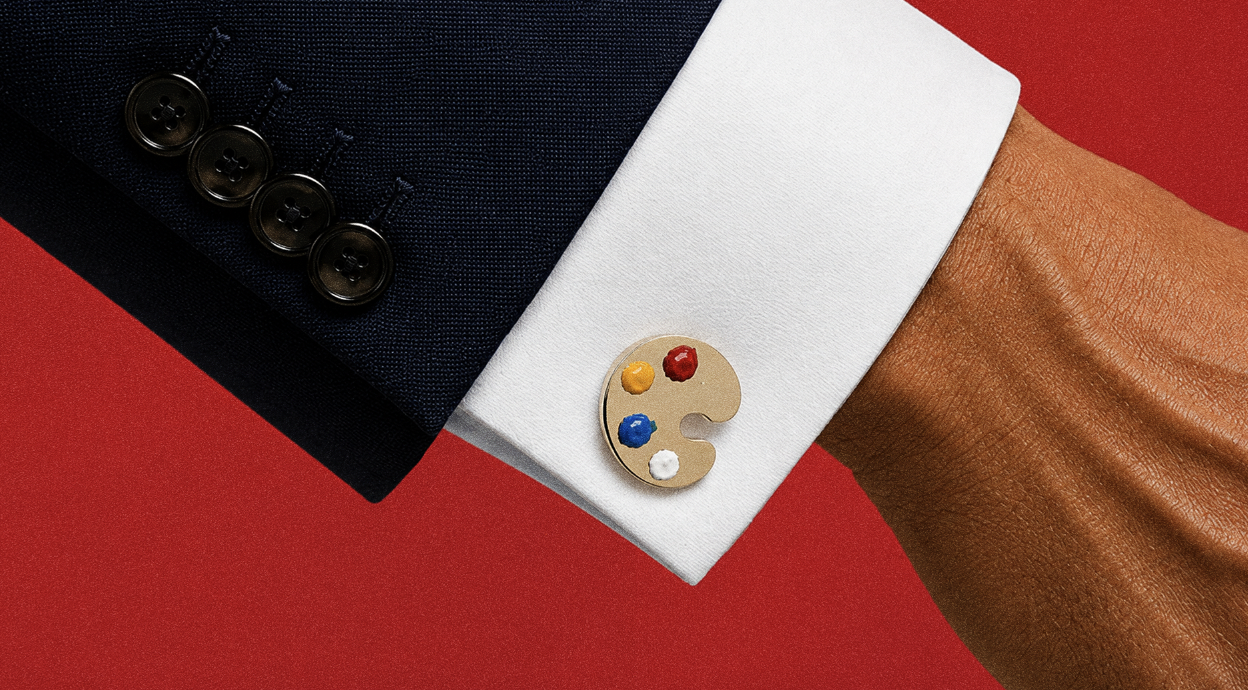
It wasn’t that long ago that a brand announcing a creator had taken up an internal role would’ve triggered an eye roll. Gemma Collins called herself creative director at Canva. Dhar Mann as the NFL’s chief kindness officer. Olivia Nell became “out of office” director at ASOS. Those examples were all recent, but something is shifting rapidly in the space.
But as CMOs and now CEOs start taking creators seriously and the creator budget expands, that’s shifting, along with creators’ ability to join the C-Suite in more meaningful ways.
In the spring, creator and comedian Jack Shane was made chief creative officer of German candy company Katjes, to help grow it in the U.S. Similarly, soft drink brand Cool Sips named reality TV star and creator Whitney Leavitt as its chief creative and brand officer. Cherub, an investment platform connecting creators with startups, named entrepreneur Nadya Okamoto as its chief creator officer earlier this summer, to help source deals.
Continue reading this article on digiday.com. Sign up for Digiday newsletters to get the latest on media, marketing and the future of TV.

Inside toy brand Sticki Rolls’ YouTube strategy to win over Gen Alpha
August 21, 2026
This story was originally published on sister site, Modern Retail.
Launched in 2024, toy brand Sticki Rolls first took off through YouTube creators, unboxing videos and trading hauls before growing into a collectible brand and generating more than a billion YouTube views. Now, the brand is leveraging that success as it focuses on new channels.
Sticki Rolls’ signature sticker books first launched in specialty toy stores and on Amazon, before entering Target. In late 2025, the brand expanded into Walmart, its biggest retailer to date, and it’s now available in more than 60 countries. Last year, the Sticki Book of stickers was awarded as Creative Toy of the Year at the 60th U.K. Toy Industry Awards.
Continue reading this article on digiday.com. Sign up for Digiday newsletters to get the latest on media, marketing and the future of TV.
Brand Equity | Latest Advertising and Marketing Industry Information and Updates: ET BrandEquity : ETBrandEquity.com

The Metric Your AI Needs That Your Marketing Stack Can't Compute
August 25, 2026

How India’s consumers are reshaping the future of food and business
August 25, 2026

Cost pressure: Carmakers see strong sales but lower profits
August 25, 2026
AI, trust, and the future of money: With AI making payments invisible, trust becomes the new currency
August 25, 2026
Showcase India's strengths to woo tourists: PM Modi
August 25, 2026

Spendonomics: India could soon have the world’s second-largest population of big spenders
August 25, 2026

India overtakes China in premium intercontinental demand: Lufthansa Exec
August 25, 2026

F&B regulatory crackdown sends celebrities into endorsement rethink
August 25, 2026

Marketing, The New Corporate Currency
August 25, 2026

Advertisers move mobile budgets from walled gardens to independent players: Emarketer report
August 24, 2026
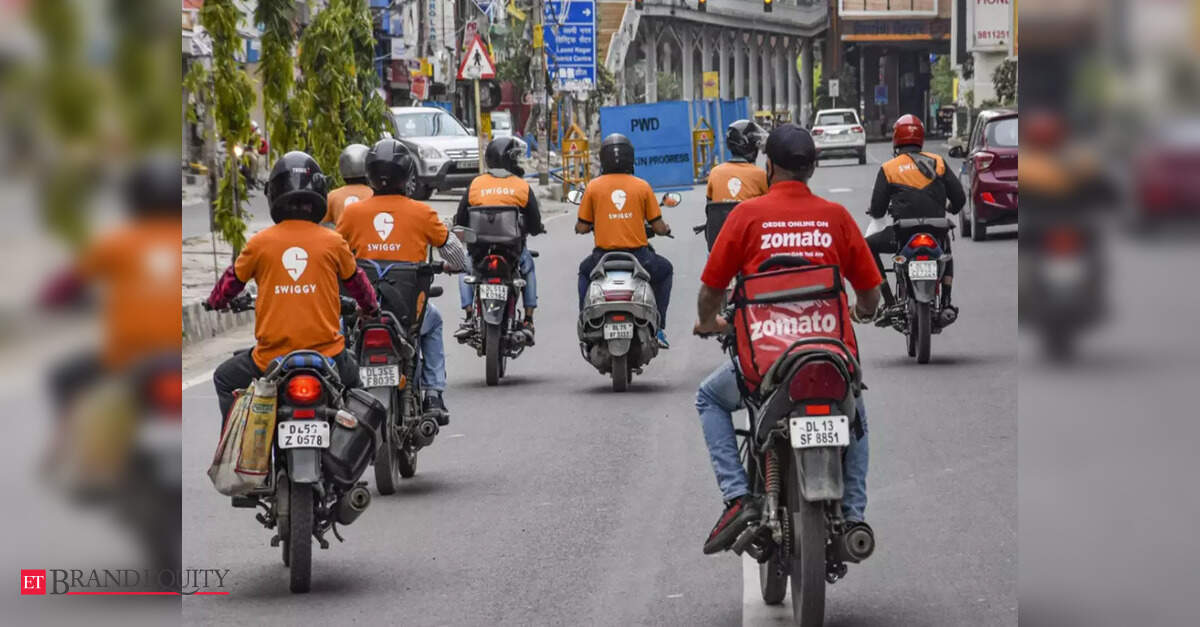
Festive hiring boom shifts to tier II and III cities as demand surges
August 24, 2026
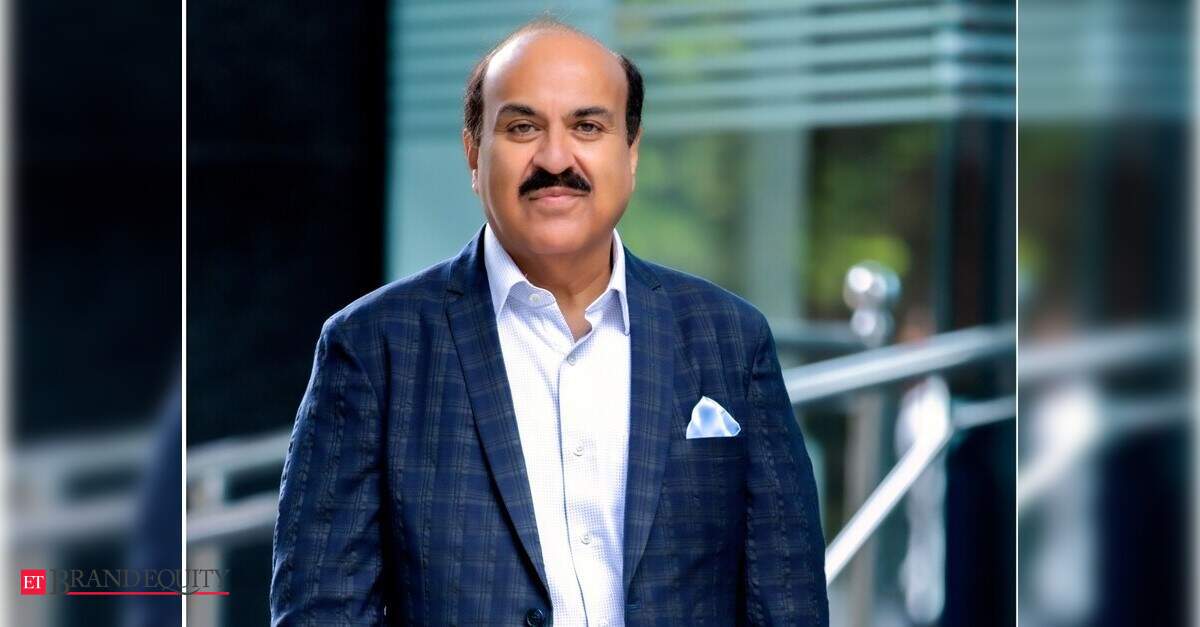
Acer’s House of Acer strategy starts with service, not sales: Harish Kohli
August 24, 2026

Winning India’s consumers in the age of instant expectations
August 22, 2026

Blue Zone island-hopping emerges as the new luxury travel trend
August 22, 2026
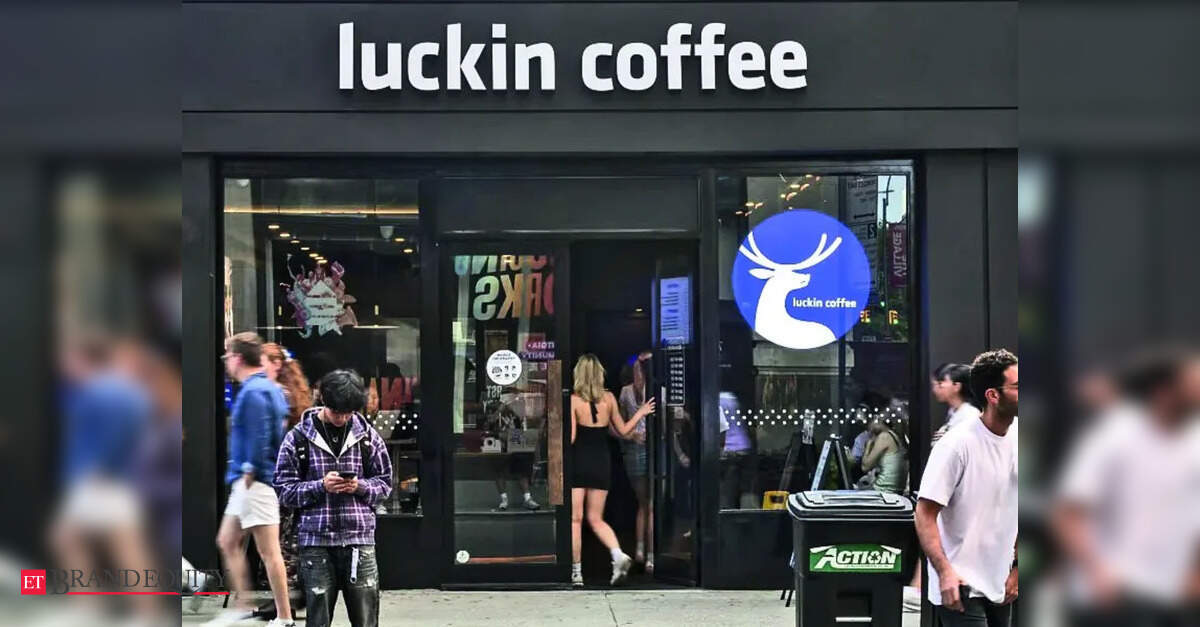
As Luckin expands globally, can China’s coffee brand succeed where its soft power has struggled?
August 22, 2026
A Glass Full of Apple
August 22, 2026

Whirlpool India to revive brand, sets sights on premium play: MD Narasimhan Eswar
August 21, 2026

American Express inks strategic partnership with NMACC
August 21, 2026

Conscious consumers are reshaping food innovation in India
August 21, 2026

South India's always-on cultural calendar: Why brands are ditching the one-and-done blockbuster play
August 21, 2026